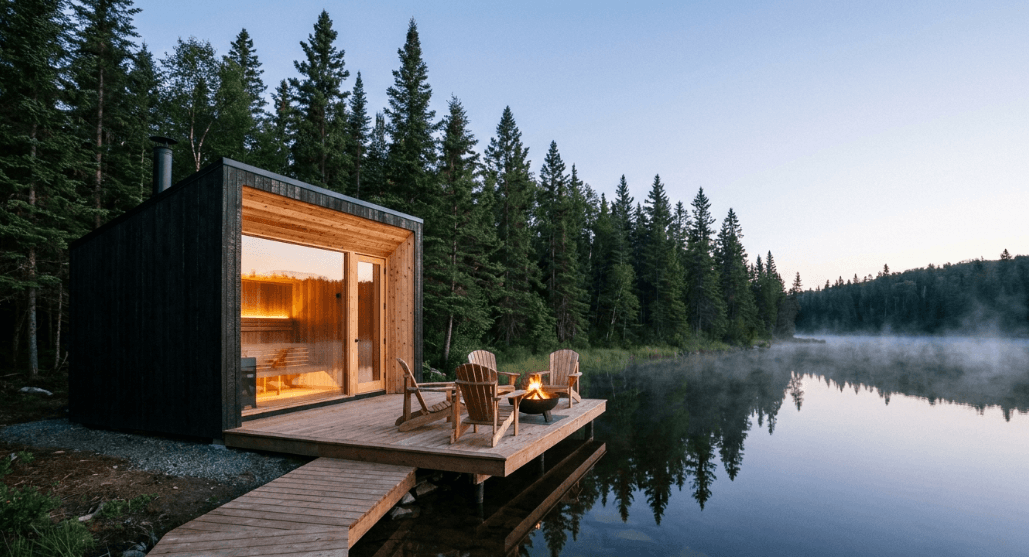

For two people using an outdoor sauna every day, the setup that holds up best combines a cabin or barrel model with 16 to 24 square feet of interior floor space, a 6 to 7 kilowatt electric heater on a dedicated 240-volt circuit, kiln-dried cedar or thermally modified spruce paneling, and real cross-ventilation. Expect a total installed cost of $5,500 to $9,500 once the heater, wiring, and a pad are factored in. Daily use rewards a slightly larger heater and simpler, more durable controls over the cheapest unit on the page, because that unit is the one working hardest, every single day, for years.
How Much Interior Space Do Two Daily Users Actually Need?
A single-use weekend sauna can get away with a tight footprint, but a cabin two people sit in every day needs enough room that nobody is bracing a knee against the heater guard. A 6-foot-diameter barrel or a 4-by-6-foot cabin gives about 16 to 24 square feet of usable floor, which is enough for two facing benches at 20 to 24 inches deep with a center aisle wide enough to step past someone already seated. Ceiling height matters too: 6 feet 4 inches at the peak of a barrel, or a flat 6-foot-6 in a cabin, keeps a standing adult from ducking every time they enter. Buyers upgrading from occasional use to a daily habit consistently report that the extra 10 to 15 square feet is the difference between a sauna that feels like a chore to enter and one that feels like part of the routine.
What Heater Size Holds Up to Back-to-Back Daily Sessions?
Heater sizing is normally quoted against cubic footage, with roughly one kilowatt per 45 to 50 cubic feet as a starting point for a tight, well-insulated box. Daily users are better served by sizing toward the top of that range, or slightly above it, because a heater that is exactly adequate for one session struggles to recover full temperature for a second session an hour later. A 6 to 7 kilowatt unit in a two-person cabin heats in 30 to 40 minutes and holds steady through consecutive sittings without cycling on and off constantly, which is easier on the heating elements over years of daily use. Rock capacity matters as well; a heater loaded with 80 to 100 pounds of rock holds more residual heat between water pours than a thinly stocked unit, which shortens the recovery time between two people’s sessions.
Which Wood and Panel Details Matter Most for Everyday Use?
Western red cedar and thermally modified spruce are the two materials that consistently perform under daily heat cycling without warping or excessive resin. Tongue-and-groove interior paneling with no exposed metal fasteners keeps the surface comfortable against bare skin, which matters more when it happens daily rather than once a month. On the exterior, look closely at the door hardware and threshold seal, since a sauna opened and closed twice a day wears out cheap hinges and gaskets far faster than one used on weekends. A magnetic door latch and a weatherstripped threshold are small details that keep heat loss down and keep the door from sagging after a year of daily use in rain and sun.
What Should Two People Expect to Pay for a Daily-Use Setup?
A realistic budget for a two-person outdoor sauna built for daily use runs $5,500 to $9,500 once everything is included: the cabin itself, a properly sized heater, a dedicated 240-volt circuit run from the panel, and a pad or gravel base to set it on. Shops that specialize in outdoor sauna kits typically break pricing into the unit, the heater wattage, and freight as separate line items rather than bundling them, which makes real comparisons possible. Taking a few minutes to view current pricing across a couple of these retailers before ordering is the easiest way to catch a model where the heater is undersized for the price being asked. Spending slightly more upfront on a heater built for continuous daily cycling generally costs less over five years than replacing a bargain unit that burns out in eighteen months.
How Should a Daily-Use Sauna Be Placed and Vented?
Placement matters more for daily habits than for occasional use, since a long walk across a wet yard in winter is the fastest way to kill a routine. Setting the cabin within 30 to 40 feet of a door, on a level pad with drainage sloped away from the base, keeps the walk short and the floor dry underfoot. Ventilation needs a low intake vent near the heater and a higher exhaust vent on the opposite wall, which keeps fresh air moving through and prevents the wood from staying damp between sessions, a common cause of premature panel warping in units used daily rather than occasionally. A small roof overhang over the door also keeps rain off the threshold, which matters when the door is opening and closing every day of the year.
What Does the Evidence Say About Frequent Sauna Use?
Research on sauna frequency comes mostly from Finnish cohort studies, and the pattern is consistent: more frequent use is associated with more favorable cardiovascular outcomes, not proof that daily sauna use prevents disease in any individual. A 2018 review in Mayo Clinic Proceedings summarized associations between regular sauna bathing and lower rates of cardiovascular events across several studies. A separate systematic review in Evidence-Based Complementary and Alternative Medicine reported comparable associations for regular dry sauna use, including effects on vascular function. An earlier review in The American Journal of Medicine covered both the benefits and the real risks, noting that people with unstable heart disease, recent illness, or pregnancy are typically advised to be conservative with frequency and session length. Two people building a daily habit should treat these findings as a reason to start with shorter sessions and build up gradually, not as a green light to push temperature and duration from day one.
Frequently Asked Questions
How big should a two-person outdoor sauna be? Interior floor space of roughly 16 to 24 square feet works well, whether that is a 6-foot-diameter barrel or a 4-by-6-foot cabin, with bench depth of 20 to 24 inches so both people can sit or recline comfortably.
What size heater is right for daily use? For a well-insulated two-person cabin, 6 to 7 kilowatts is a common daily-use size, sized slightly above the bare minimum so the unit recovers heat quickly between back-to-back sessions.
How much does a daily-use outdoor sauna setup cost? Budget $5,500 to $9,500 installed, covering the cabin, a properly sized heater, a dedicated 240-volt circuit, and a pad or foundation.
Is using a sauna every day safe? Population studies link frequent use with favorable cardiovascular markers, an association rather than a guarantee. Anyone with unstable heart disease, recent illness, or pregnancy should be conservative with frequency and temperature.
References
- Cardiovascular and Other Health Benefits of Sauna Bathing: A Review of the Evidence, Mayo Clinic Proceedings, 2018
- Clinical Effects of Regular Dry Sauna Bathing: A Systematic Review, Evidence-Based Complementary and Alternative Medicine, 2018
- Benefits and risks of sauna bathing, The American Journal of Medicine, 2001