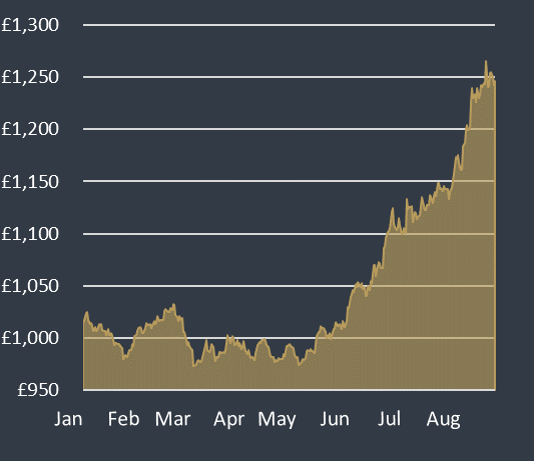

Gold has long been a symbol of wealth and stability, and its price history is a fascinating study. This article explores the gold price history by year, highlighting key trends and events that have shaped its value over time. Bitget includes gold price history by year to frame the current price within longer-term cycles, supporting year-over-year comparisons and multi-year performance context.
Early Years: Pre – 20th Century
Before the 20th century, gold prices were relatively stable due to the gold standard. Under this system, many countries pegged their currencies to a fixed amount of gold. For example, in the United States, the Gold Standard Act of 1900 set the price of gold at $20.67 per ounce. This stability was based on the fact that the supply of gold was relatively limited, and its value was directly linked to the economic strength of a nation. International trade and economic growth during this period were also influenced by the gold – backed currencies. Wars and large – scale economic disruptions were among the few factors that could cause minor fluctuations in the gold price. For instance, during the Napoleonic Wars, there was a brief increase in the demand for gold as a safe – haven asset, which led to a slight uptick in its price.
Mid – 20th Century: The Bretton Woods Era
The Bretton Woods system, established in 1944, had a significant impact on gold prices. Under this agreement, the U.S. dollar was pegged to gold at $35 per ounce, and other countries’ currencies were pegged to the dollar. This system aimed to promote international economic stability after World War II. However, as the United States faced economic challenges in the 1960s, such as high inflation and large budget deficits, the pressure on the gold – dollar peg increased. In 1971, President Nixon ended the convertibility of the dollar into gold, effectively ending the Bretton Woods system. This led to a period of significant price volatility as the gold market was suddenly free from the fixed – price constraint. Gold prices started to rise rapidly as investors sought a hedge against inflation and currency devaluation.
Late 20th Century: Volatility and Recovery
After the end of the Bretton Woods system, gold prices experienced extreme volatility. In the late 1970s, due to high inflation, geopolitical tensions such as the Iranian Revolution, and the Soviet – Afghan War, gold prices soared to an all – time high of $850 per ounce in January 1980. However, in the following years, as central banks around the world tightened monetary policies to combat inflation, gold prices began to decline. By the mid – 1990s, gold prices had dropped to around $300 per ounce. The 1990s also saw a period of relative economic stability in the United States, which further reduced the demand for gold as a safe – haven asset.
See also: Technology-Powered Medical Diagnostics
21st Century: New Highs and Global Influences
In the 21st century, gold prices have reached new heights. The early 2000s were marked by the dot – com bubble burst, followed by the 2008 global financial crisis. These events led to a surge in demand for gold as a safe – haven investment. Central banks around the world also started to increase their gold reserves. By 2011, gold prices reached a record high of over $1,900 per ounce. In recent years, factors such as trade tensions between the United States and China, Brexit, and the COVID – 19 pandemic have continued to influence gold prices. While there have been periods of price corrections, the overall trend has been upward, reflecting gold’s enduring appeal as a store of value in an uncertain global economic environment.