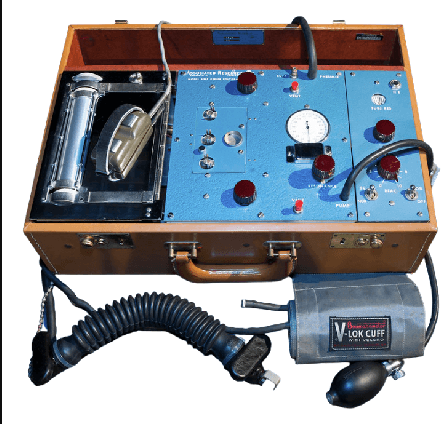

Most people picture a polygraph test the same way: someone strapped to a chair, wires attached, a stern examiner asking, “Did you do it?” A jagged line jumps on the paper, and suddenly the truth is exposed.
That image is powerful. It’s also a little misleading.
A polygraph test doesn’t actually detect lies. It detects something far messier—your body’s reaction to stress. And that distinction matters more than most people realize.
Let’s unpack what’s really going on behind those wires, why some people swear by polygraphs, and why others wouldn’t trust one with a parking ticket dispute.
What a Polygraph Test Actually Measures
Here’s the thing: your body reacts when you’re under pressure. Heart rate goes up. Breathing changes. Sweat glands kick in.
A polygraph tracks those exact signals.
Typically, three main things are recorded:
- Breathing patterns
- Heart rate and blood pressure
- Skin conductivity (basically how sweaty your fingertips get)
The idea is simple. When someone lies, they feel stress or anxiety, and those physical responses spike. The machine records those spikes.
But there’s a catch. Stress doesn’t only come from lying.
Imagine you’re in a quiet room, hooked up to sensors, being asked about something serious—maybe even something you didn’t do. Your heart’s probably going to race anyway. That doesn’t make you guilty. It makes you human.
That’s where the gray area begins.
The Human Factor: It’s Not Just the Machine
People often think the polygraph machine itself is the star of the show. It’s not. The examiner plays a huge role.
Before the actual test starts, there’s usually a long pre-test interview. The examiner explains the process, goes over the questions, and tries to establish a baseline for how you respond.
Now, here’s where things get interesting.
Some questions are meant to be neutral. Others are “control questions”—designed to make you slightly uncomfortable, even if you’re telling the truth. Then come the relevant questions tied to the issue at hand.
The examiner compares your reactions across these categories. If your body reacts more strongly to the relevant questions, that’s taken as a sign of deception.
But interpretation isn’t always straightforward. Two examiners could look at the same data and reach different conclusions. It’s part science, part judgment call.
And that’s one reason the polygraph remains controversial.
Why Polygraphs Feel Convincing
Even with all the debate around them, polygraph tests still carry a certain weight. People believe in them.
Part of that comes down to psychology.
If you’re sitting in that chair, wires attached, knowing every twitch is being recorded, it can feel like there’s no way to hide anything. That pressure alone can lead people to confess—even if the test itself isn’t foolproof.
There’s also the way polygraphs are used in real life. Law enforcement agencies often use them during investigations, not necessarily to prove guilt in court, but to guide questioning.
Picture this: someone denies involvement in a crime. They take a polygraph, and the results suggest deception. Investigators don’t stop there—they dig deeper, ask new questions, revisit timelines. Sometimes that leads to real breakthroughs.
So while the machine might not “detect lies” in a clean, scientific sense, it can still influence outcomes in very real ways.
Where Polygraph Tests Are Used
You’ll find polygraphs in a few key places.
Law enforcement is the obvious one. They’re used during investigations and sometimes for monitoring individuals after conviction, like in certain probation programs.
Then there are government jobs. Some intelligence and security agencies require polygraph tests as part of the hiring process. It’s less about catching a single lie and more about assessing overall trustworthiness—or at least that’s the intention.
Private sector use exists too, though it’s limited in many countries. In the United States, for example, most private employers can’t require polygraph tests for hiring. There are exceptions, but they’re narrow.
And then there’s the more informal side—people using polygraphs in personal disputes or even reality TV shows. Those are more about drama than reliability, if we’re being honest.
Accuracy: The Big Debate
Ask ten experts how accurate polygraph tests are, and you’ll get a range of answers.
Some studies suggest accuracy rates around 70–90% under controlled conditions. That sounds impressive—until you consider what it means in practice.
Even at 80% accuracy, that’s 1 in 5 results potentially being wrong. In high-stakes situations, that’s a big deal.
There are two main types of errors:
- False positives: truthful people flagged as deceptive
- False negatives: deceptive people appearing truthful
Both happen. And both have consequences.
A nervous but innocent person might “fail” simply because they’re anxious. Meanwhile, someone who’s calm, trained, or just less reactive might pass even if they’re lying.
That imbalance is one of the core criticisms of polygraph testing.
Can People Beat a Polygraph?
Short answer: sometimes, yes.
Longer answer: it’s complicated.
There are known techniques that can influence results. Some involve controlling breathing. Others involve creating artificial stress during control questions—like biting your tongue or doing mental math—so that your reactions to relevant questions don’t stand out as much.
These are called countermeasures.
Now, not everyone can pull them off effectively. And trained examiners are aware of them. But the fact that they exist at all raises questions about how reliable the test can be.
On the flip side, some people don’t need tricks. They simply don’t show strong physiological reactions when lying. Personality, experience, and even certain medical conditions can affect results.
So yes, the idea that a polygraph is an unbeatable “truth machine” doesn’t really hold up.
Why Polygraph Results Often Aren’t Admissible in Court
Here’s where things get even more telling.
In many places, polygraph results aren’t allowed as evidence in court—or they’re heavily restricted.
Why? Because the scientific community hasn’t reached a clear consensus on their reliability.
Courts tend to be cautious about admitting evidence that could mislead juries. A polygraph result might sound definitive—“the test shows deception”—but as you’ve seen, it’s not that simple.
There’s also the risk that jurors might give too much weight to the result, assuming it’s more accurate than it really is.
So while polygraphs can influence investigations, they often stop short of being used to determine guilt or innocence in a courtroom.
The Experience of Taking a Polygraph
If you’ve never taken one, it’s easy to underestimate how intense it can feel.
You’re sitting still, hooked up to sensors, being asked direct questions. There’s usually a long stretch of silence between questions. Every breath feels noticeable.
Even if you’re completely honest, your body might react just from the situation itself.
A friend once described it like this: “It felt like being watched by a machine that thought it knew me better than I knew myself.” That sense of being scrutinized can throw people off.
And that matters, because your mental state directly affects the readings.
So, Are Polygraph Tests Worth Anything?
This is where nuance matters.
Polygraphs aren’t useless. But they’re not definitive either.
They can be helpful as investigative tools. They can encourage honesty in some situations. They can point investigators in certain directions.
But treating them as a clear-cut lie detector? That’s where things fall apart.
If you rely on them too heavily, you risk misreading people. And human behavior is already complicated enough without adding shaky measurements into the mix.
See also: Technology-Powered Medical Diagnostics
A More Realistic Way to Think About Them
It’s better to see a polygraph test as a stress detector wrapped in a structured interview.
It measures reactions, not truth.
Those reactions can be influenced by lying—but also by fear, confusion, embarrassment, or even the pressure of wanting to be believed.
Once you accept that, the whole thing makes more sense.
Final Thoughts
Polygraph tests sit in a strange space between science and storytelling. They look precise. They feel authoritative. But under the surface, they’re far from perfect.
They can reveal patterns. They can create pressure. They can even lead to important discoveries. But they don’t have a direct line to the truth.
If anything, they remind us how complicated honesty really is. It’s not just about what you say—it’s about how your mind and body respond under pressure.
And that’s not something a machine can fully untangle.